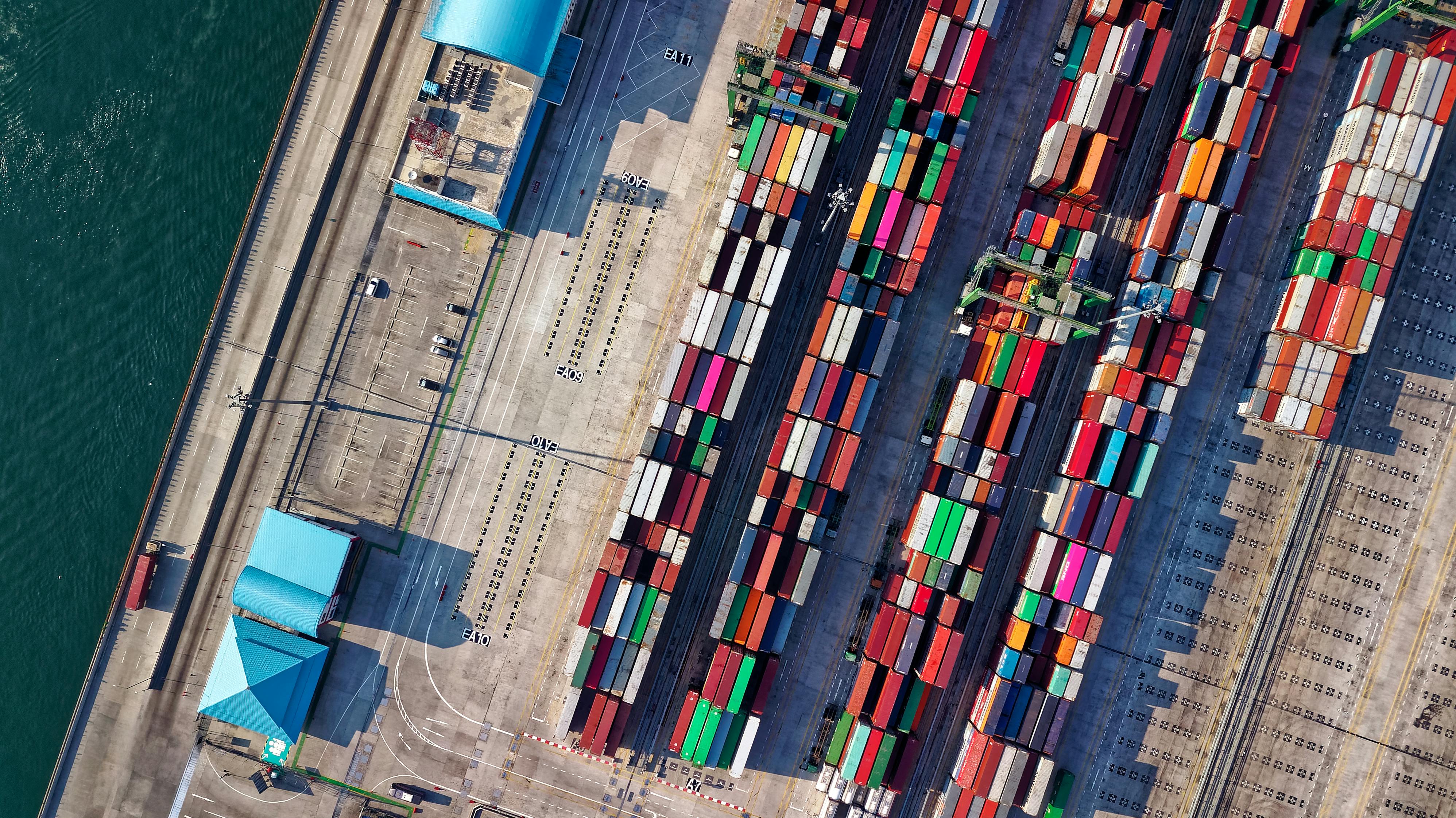
The arrest of Venezuelan president Nicolás Maduro following U.S. action under the Trump administration has triggered far-reaching consequences beyond politics. Global transport routes, logistics chains, and insurance risk models are now adjusting to a sudden shift in geopolitical stability.
Global Transport Risk After Venezuela: How the Maduro Arrest Is Sending Shockwaves Through Insurance and Logistics
The arrest of Venezuelan president Nicolás Maduro and his wife following direct action by the United States under former president Donald Trump has altered the geopolitical landscape in ways that extend far beyond diplomatic relations. While international attention has focused on legal, political, and humanitarian implications, another transformation is unfolding more quietly across global transport networks and insurance markets.
At AmericanInsuranceAI, we observe that sudden political events of this magnitude often reveal how deeply interconnected logistics, insurance, and geopolitical stability truly are. The disruption triggered by the Venezuela situation is not limited to one country or one sector. It is reverberating across shipping lanes, aviation corridors, supply chains, and the insurance frameworks that underpin global trade.
Political rupture and transport stability
Transport systems rely heavily on predictability. Shipping schedules, air routes, port operations, and customs processes all function best in stable political environments. When a government collapses or leadership is removed abruptly, that predictability is immediately compromised.
The detention of Nicolás Maduro represents a sharp political rupture rather than a gradual transition. For insurers and logistics operators, this distinction matters. Abrupt political change increases uncertainty around port security, border controls, regulatory enforcement, and the continuity of transport infrastructure.
As a result, transport risk assessments tied to the Caribbean, northern South America, and connected Atlantic routes have entered a period of rapid reassessment.
Shipping routes under renewed scrutiny
Venezuela occupies a strategic position in regional shipping. Its ports connect energy exports, agricultural goods, and manufactured products to global markets. Political instability surrounding these ports immediately affects maritime risk.
Marine insurers closely monitor changes in port governance, labor stability, and security conditions. Following Maduro’s arrest, questions have emerged regarding who controls port operations, how customs procedures will be enforced, and whether contractual obligations will be honored.
These uncertainties increase exposure for cargo insurers, hull insurers, and freight operators, even when shipments do not originate directly from Venezuela.
Insurance as a prerequisite for movement
Transport cannot function without insurance. Ships, aircraft, cargo, and logistics providers depend on coverage to operate legally and financially.
When geopolitical instability rises, insurance does not disappear, but it becomes more conditional. Coverage terms may tighten, exclusions may expand, and risk premiums may be reassessed. These changes ripple through logistics chains, influencing decisions about routing, scheduling, and contractual commitments.
The Venezuela situation illustrates how political events can indirectly slow or complicate global movement by altering the risk environment insurers must account for.
Air transport and overflight considerations
Although Venezuela is not a major aviation hub, political instability affects regional airspace management. Airlines depend on overflight permissions, airport security coordination, and predictable regulatory oversight.
Sudden regime change introduces uncertainty regarding aviation authorities, safety enforcement, and international compliance. Insurers covering aircraft hulls, passenger liability, and crew risk must evaluate whether operational conditions remain stable.
Even temporary uncertainty can influence route planning and insurance conditions for regional carriers.
Indirect exposure through global supply chains
Many companies affected by the current situation have no direct operations in Venezuela. Nevertheless, they remain exposed through supply chains.
Energy inputs, raw materials, and intermediate goods often pass through multiple jurisdictions before reaching final destinations. Disruption at one node can cascade across continents.
Insurance coverage for business interruption, contingent business interruption, and supply chain disruption becomes particularly relevant under such conditions.
Risk perception after U.S. intervention
The involvement of the United States, and the association of the operation with Donald Trump, adds another layer of complexity. U.S. actions carry global signaling effects.
For insurers, the key issue is not political alignment but escalation risk. When major powers act directly, the likelihood of secondary effects increases, including retaliatory measures, legal disputes, or regional instability.
Transport insurers must consider whether routes passing near affected regions face heightened geopolitical sensitivity.
Ports, governance, and contractual uncertainty
Transport infrastructure depends on contracts: port concessions, terminal agreements, service contracts, and labor arrangements.
Political upheaval can place these contracts in legal limbo. Insurers covering port operators and logistics firms must evaluate whether contractual performance can be maintained under new or interim authorities.
Uncertainty surrounding governance increases operational risk, even if physical infrastructure remains intact.
The role of political risk insurance
Political risk insurance exists precisely for moments like this. It covers losses arising from government actions, expropriation, currency controls, and political violence.
However, political risk insurance is not unlimited. Coverage depends on precise definitions and conditions that may be tested during sudden regime changes.
The Venezuela case is likely to generate renewed scrutiny of political risk clauses related to transport and logistics operations.
Reinsurance and systemic exposure
Reinsurers sit behind primary insurers, absorbing aggregated risk across regions and sectors.
When transport disruption coincides with political instability and energy exposure, losses may become correlated rather than isolated. This correlation challenges traditional diversification assumptions.
The current situation highlights how geopolitical events can stress reinsurance structures, even without immediate large-scale losses.
Legal disputes and claims complexity
Political upheaval often leads to legal disputes over delays, non-performance, and force majeure.
Transport insurers may face complex claims involving delayed cargo, abandoned shipments, or contested liabilities. Resolving these claims requires careful interpretation of policy language and international law.
Such disputes can take years to resolve, extending the impact of a political event well beyond its immediate aftermath.
Why transport risk matters to the global economy
Transport is the circulatory system of the global economy. When movement slows or becomes more uncertain, economic activity follows.
Insurance plays a central role in maintaining continuity during periods of instability. By absorbing risk, it allows trade to continue even under adverse conditions.
When political shocks disrupt this balance, the effects are felt far beyond the transport sector.
Looking ahead after Venezuela
The arrest of Nicolás Maduro represents more than a political milestone. It marks a moment of reassessment for industries that depend on stable governance and predictable risk.
For transport and logistics, the coming months will involve adaptation rather than withdrawal. Routes will adjust, contracts will be renegotiated, and insurance frameworks will evolve.
At AmericanInsuranceAI, we believe this episode underscores a broader reality: in an interconnected world, political events reshape transport risk as much as physical disruptions do.
Conclusion: transport risk in a geopolitical age
The events surrounding Venezuela demonstrate how quickly transport stability can be affected by political decisions.
Insurance does not eliminate uncertainty, but it provides a framework for managing it. As geopolitical intervention becomes more direct and less predictable, the role of insurance in sustaining global logistics becomes increasingly critical.
Understanding this relationship is essential for interpreting how global trade will function in an era where political risk is no longer distant, but immediate.
Sources and references
International Maritime Organization (IMO)
Insurance Information Institute (III)
National Association of Insurance Commissioners (NAIC)
World Economic Forum – Global Risk Reports
International media reporting on Venezuela and U.S. actions